You can spot a generated website in about a second, and so can the person deciding whether to email you. You do not read it first.
You take in the shape of the page, the three little icons, the gradient behind the headline, and something in you files the whole business under seen it already. Then you leave, and nobody hears about it.
That judgement now lands on the business behind the page, which is why it costs money rather than pride. Here are four checks you can run on your own homepage this afternoon, in the order a stranger runs them, and the one to fix first if you only have two hours.
The evidence for what people are reacting to is unusually precise. The Economist ran 55,940 of its own sentences, about 1,200,000 words, against rewrites of the same copy by ChatGPT, Claude, Gemini and Grok. The clearest split was punctuation: the machines used fewer commas, fewer semicolons, fewer brackets.
And they wrote sentences that came out close to the same length as one another, one after the next, evenly. So the tell is rhythm rather than vocabulary. You can hear it without any design training at all, which is what makes the first check the cheapest one you own.
01Read your About paragraph out loud
Open the page, find the paragraph where you explain what the business does, and read it aloud while marking every place you take a breath. If every sentence ends roughly where the last one ended, your visitor is hearing the flatness you just heard.
But they will not call it flatness. Most people have no words for prose rhythm, so they reach for something vaguer, and what they reach for is a judgement about you: the page was not written by anyone in particular, so perhaps nobody in particular is here.
The repair is mechanical and takes about twenty minutes a page. Find two sentences sitting next to each other that belong together, and join them with a semicolon or with the word because; that word is usually what went missing.
Then find the one sentence carrying the whole point, and cut it under eight words. The reader gets a beat of silence.
Here is the repair on a line we were sent in July. We provide tailored services for growing businesses. We deliver quality and value on every project. Joined and cut, that becomes: we build the page that sells the thing; most sites we inherit were built to exist.
Same claim, same length, one difference. A person chose where to stop.
Human writing moves unevenly because somebody is making that choice forty times a page, and the unevenness is what you are restoring. It survives the next check too.
02Swap your logo for a competitor's
Copy a paragraph from your homepage, change the company name to your nearest competitor's, and read it again. If it still makes sense, that paragraph was telling a visitor nothing about you. It was telling them nothing before you swapped it, too.
Somebody on r/juststart measured a hundred of their own comments to work out why readers kept calling them machine-made, and landed on this same test. Their wording beats ours.
AI slop is a comment that is relevant to the topic but not to the person.r/juststart, after measuring a hundred of their own comments
What survives the swap comes from information only you hold. Leirós Consulting, a client of ours, opens US companies for founders living somewhere else, and their site runs in four languages. Each one was written rather than translated.
The moment the Spanish reads like English wearing a costume, a founder in Bogotá stops believing anyone at the firm speaks to him.

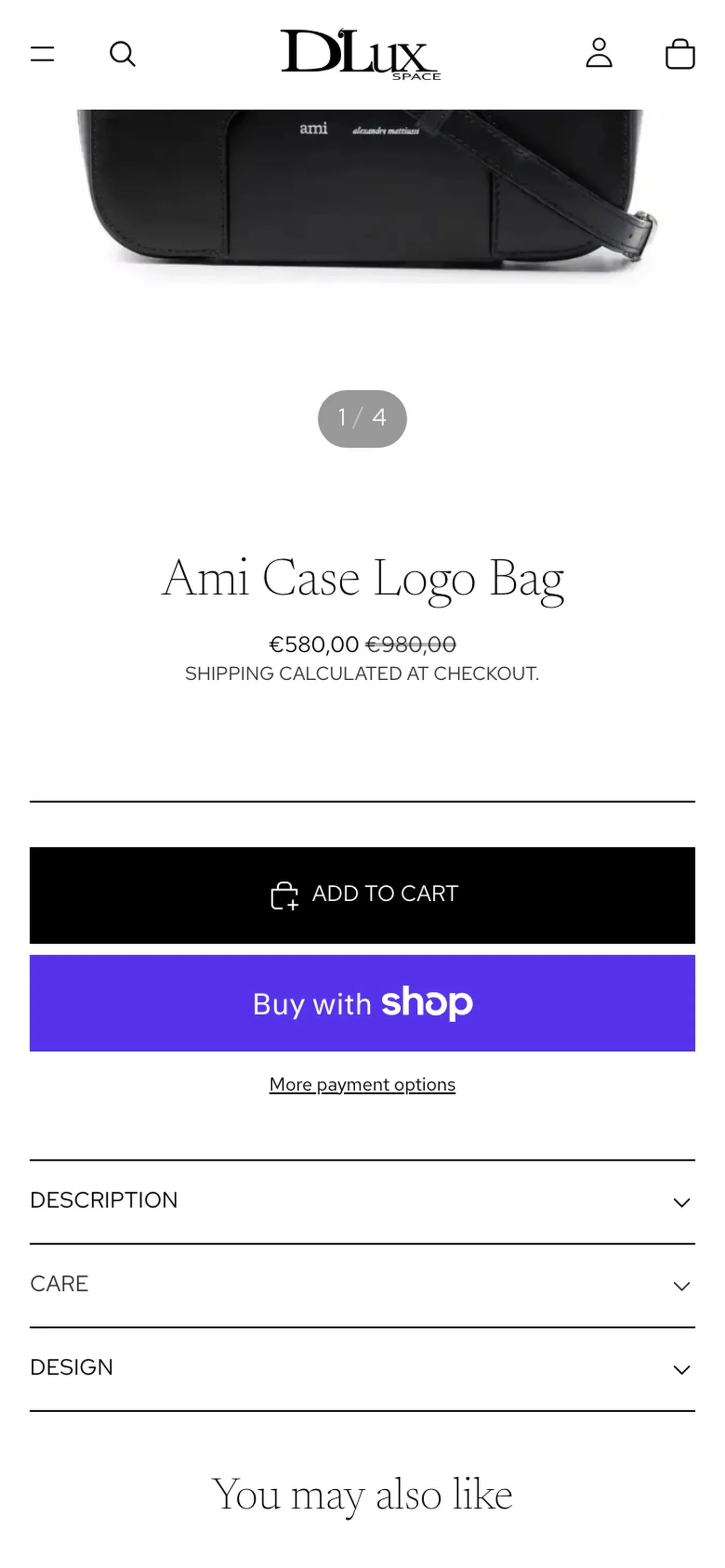
D'Lux Space, another client, sells designer labels at outlet prices across four European markets. Most of that project went into photographing real garments at a size where you can see the weave, because a buyer who cannot touch the coat before paying is asking one question, and the question is whether the coat is real.
Neither of those paragraphs could be handed to a competitor. That is the whole test, and the next one runs it on your layout instead of your words.
03Look at the shape of the page
Stand back from your screen until the words blur, then look at the arrangement. A centred headline. A soft gradient behind it, three feature cards with small icons, and a testimonial from a company nobody can verify.
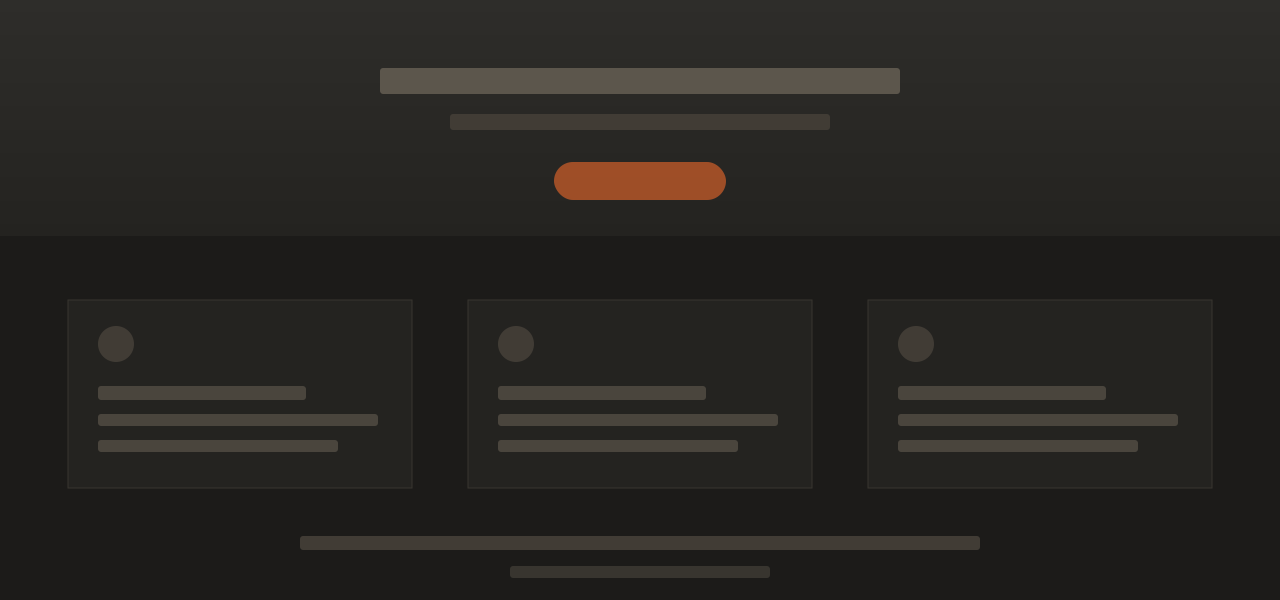
That shape tests well, which is exactly why every builder ships it and why your visitor has met it thirty times this month. Once somebody has seen a layout often enough, they stop seeing a website and start seeing a template. Everything printed on the template inherits the same discount.
You do not need a redesign to break the pattern, and in most cases you should not buy one yet. Replace the three stock icons with three photographs: the thing you actually sell, the room people actually walk into, taken on a phone in decent light.
Mindful Crumb, who we work with in Porto, sells single-ingredient supplements on one line, one ingredient and nothing to hide. So the packaging had to earn that line before any copy repeated it; a stock icon of a leaf would have quietly contradicted the whole brand.
A photograph of the actual powder costs nothing and argues for you. So far every check has been about a human visitor. The last one hands your page to a reader who is not.
04Ask a machine who you should hire
Open ChatGPT or Perplexity and ask what your customer would ask: who should I hire to build a website for a small business. Somebody ran that across 34 answers and three assistants.
One name came back in almost every reply, and it was Wix, a builder rather than a studio or a designer.
The version that matters is narrower: your category, your city, the thing you are actually paid for. See whether anything about your business is concrete enough for a machine to describe and then repeat to a stranger who has never heard of you.
Write down what the assistant says about you, then read it beside your own homepage. If the two do not match, the page is no longer where your customer meets you first.
AI content ranks fine on Google anyway, which is true, and the SEO people arguing about it concede the point themselves. But ranking and being recommended have come apart.
Assistants now sit between your customer and their shortlist, and they summarise a category using whatever they find that is concrete: a named market, a real number, a service nobody else offers. A page built from the same parts as every other page in your category gives them nothing to hold, so they name somebody else.
You never see that happen. There is no complaint to answer, only silence where a reply should have been. Which is why r/smallbusiness keeps asking whether anyone out there notices at all.
05Stop waiting for someone to complain
Nobody notices, or nobody cares. Both are testable, and one month of posts answers them. r/Entrepreneur upvoted Stop using AI to make your flyers and social posts 417 times, with 268 comments underneath it.
r/smallbusiness put 295 upvotes on owners fed up with AI software, and a post about a colleague whose AI work had become laughable to look at drew 536. A coffee shop owner made a menu poster with AI, and the story of the angry messages that followed drew 312 comments on Hacker News. No customers arrived. The messages did.
None of those people were reviewing a website. They were reacting to a flyer, a poster, a comment, and they reacted hard enough to make a stranger's business a topic that month. Your homepage is the same material with more money resting on it.
One reader on Hacker News described his own policy plainly. Text gets discarded the moment he sees a particular mark, and he does not check for false positives, because he has decided that reading carefully costs him more than the good writing he throws away along with the bad.
So your prospective client runs that calculation on your homepage in about a second, and you will never hear about it. Which raises the fair objection underneath all of this: if the builder is free, why pay a studio at all.
06Keep the builder while you are still testing
None of this is an argument against the builder, and we would say so on a first call. If you are testing whether anyone wants the thing, build the fast version this week and keep it until it embarrasses you.
If the site carries an address, an opening time and a phone number, a builder is the right call. A builder makes a page exist.
A studio sells a set of decisions: what the page says, in what order, to whom, and what happens next. Plenty of businesses do not need those decisions bought, and we tell them so.
The line between the two cases is not the size of the business; it is how much a stranger has to take on trust before paying you. A restaurant asks for twenty dollars and a Tuesday evening. A consultancy asks for a wire transfer and six weeks of somebody's year.
So the answer changes when your website is the first thing a stranger uses to decide whether to trust you with their money, their home or their health. Mindful Crumb sells something people swallow; D'Lux Space sells a coat nobody can touch before paying. At that point the sameness has become the message, and the message is that nobody here decided anything.
Not sure which side of that line you are on?
Tell us about the business in three sentences. If a builder is the right answer, that is what we will say, and it costs you one email to find out.
Send three sentences07Fix the swap test first
Run the four checks in an afternoon, then repair them in this order. Start with the swap test, because it changes what a person and a machine both take away, and because it costs you honesty rather than money.
Fix the rhythm second; joining two sentences with a semicolon is faster than shooting new photography. The shape of the page can wait until the words have earned the layout.
Most sites we see need the first two and not the third.